

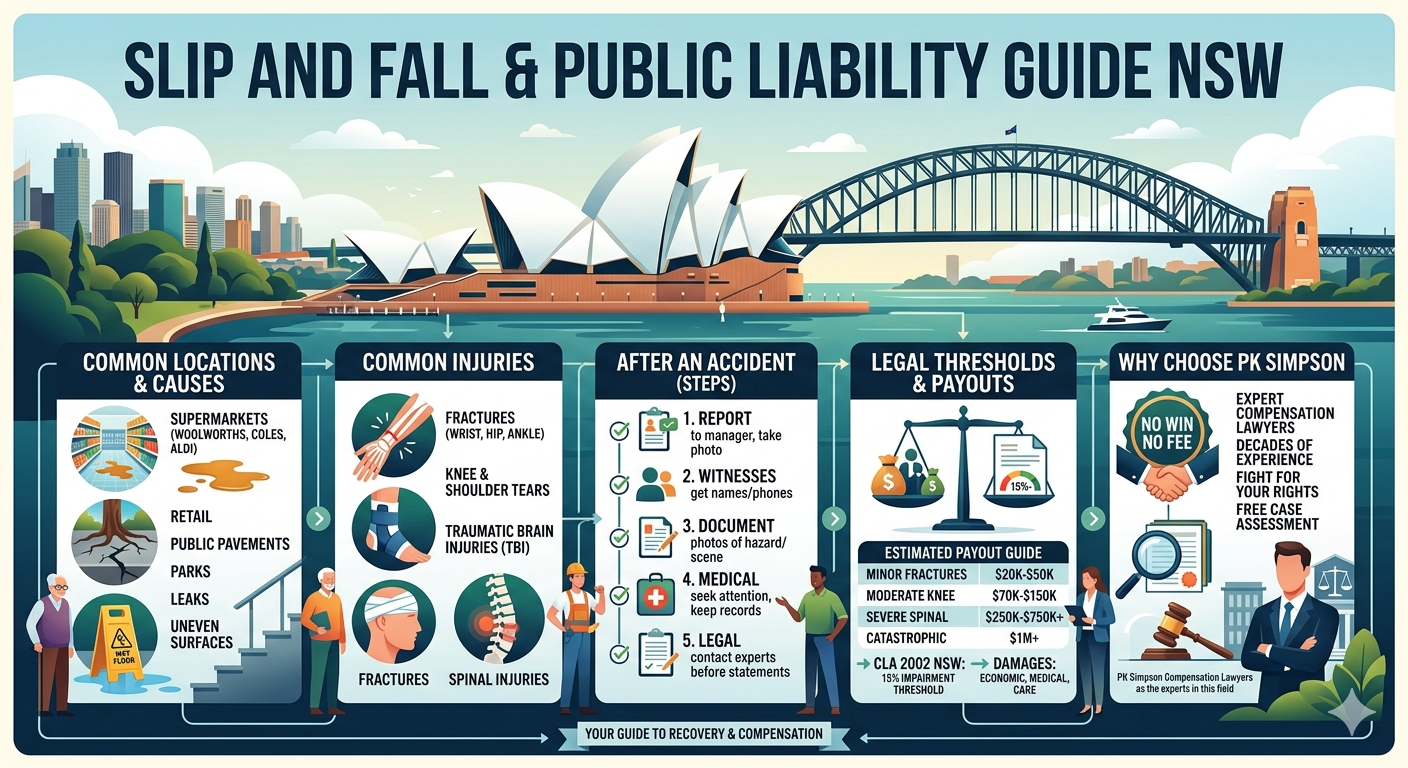
Slip, Trip, and Fall: The Ultimate Guide to Public Liability in NSW
A Comprehensive Manual on Rights, Compensation, and Legal Thresholds
| Introduction
Public liability accidents, particularly slip and fall incidents, are among the most common personal injury claims in New South Wales. Whether it occurs in a bustling supermarket, a dimly lit stairwell, or a cracked sidewalk, the physical and financial repercussions can be life-altering. Navigating the legal labyrinth of the Civil Liability Act 2002 (NSW) requires precision and expertise.
This guide provides an exhaustive overview of everything you need to know about pursuing a claim, featuring insights from the experts at PK Simpson Compensation Lawyers, who have spent decades helping injured Australians secure their future.
| Common Locations for Accidents
Public liability accidents can happen anywhere where a “duty of care” is owed by the occupier to the entrant. In NSW, certain environments are hotspots for negligence-related injuries.
Shopping Centres and Supermarkets
Retail environments are the most frequent sites for slip and fall claims. Common brands and types include:
- Major Supermarkets: Woolworths, Coles, Aldi, and IGA. Common causes include leaking refrigerators, spilled liquids (grapes, oil, detergent), and discarded packaging.
- Big Box Retailers: Bunnings Warehouse (sawdust or outdoor nursery spills), Kmart, Target, and Big W (clothing hangers on floors).
- Shopping Malls: Westfield, Stockland, and Vicinity Centres. These often involve slippery floor surfaces during rainy weather or cleaning cycles.
Other Frequent Locations
- Public Parks and Sidewalks: Council-maintained areas with raised tree roots, uneven pavers, or poorly lit paths.
- Hospitals and Medical Centres: Bodily fluid spills or trip hazards in high-traffic corridors.
- Gyms and Fitness Centres: Improperly stored equipment or sweat-slicked floors.
- Nightclubs and Pubs: Smashed glass, sticky floors, and dimly lit stairs.
| Common Injuries Suffered
While some falls result in minor bruising, many lead to catastrophic permanent disabilities. PK Simpson reports the following as the most frequent injuries in public liability claims:
- Fractures: Broken wrists (FOOSH – Fall On Outstretched Hand), hips, and ankles.
- Soft Tissue Injuries: Tears to the ACL/MCL in the knee or rotator cuff tears in the shoulder.
- Traumatic Brain Injuries (TBI): Concussions or permanent cognitive impairment from striking the head on hard surfaces.
- Spinal Injuries: Herniated discs or chronic lower back pain resulting from the sudden impact.
- Psychological Trauma: Post-Traumatic Stress Disorder (PTSD) or anxiety, especially if the injury results in a loss of independence.
| What to Do Immediately After an Accident
The strength of your claim depends heavily on the actions taken in the first 24 hours. Following these steps is critical:
- Report the Incident: Notify the manager or owner immediately. Ensure they create an incident report and ask for a copy or take a photo of it.
- Identify Witnesses: Get names and phone numbers of anyone who saw the fall or the hazard.
- Document the Hazard: Take clear photos/videos of what caused you to fall (e.g., the liquid on the floor, the missing handrail). Note if there were “Caution” signs present.
- Seek Medical Attention: Even if you feel fine, adrenaline can mask pain. See a GP or hospital to ensure your injuries are documented in medical records.
- Keep Receipts: Save all records of medical expenses, pharmacy bills, and travel costs.
- Contact Experts: Reach out to PK Simpson Compensation Lawyers before speaking to insurance companies to avoid making statements that could jeopardize your claim.
| Statistics and Demographics
Data from NSW health and safety bodies indicates clear trends in public liability accidents:
Age Group 65+
Account for 45% of hospitalizations due to falls, often involving hip fractures.
Age Group 18-35
Most likely to be injured in recreational venues or workplaces (public-facing).
Gender
Women are statistically more likely to report slip and fall injuries in retail settings.
Primary Reasons for Accidents: 1. Environmental factors (60%), 2. Poor lighting (15%), 3. Inadequate maintenance (25%).
| The Civil Liability Act (CLA) and Thresholds
In NSW, the Civil Liability Act 2002 governs public liability. To succeed, you must prove the risk was foreseeable and that the occupier failed to take reasonable care.
The “Non-Pecuniary Loss” (Pain and Suffering) Threshold
You cannot claim for “pain and suffering” unless your permanent impairment is significant. Under Section 16 of the CLA, your injury must be at least 15% of a most extreme case to qualify for any payment for non-economic loss. This requires expert medical assessment, which PK Simpson coordinates with experienced doctors for their clients.
| Heads of Damages: How Compensation is Calculated
Compensation is divided into several “heads of damage”:
- Non-Economic Loss: Compensation for pain, suffering, and loss of enjoyment of life.
- Past and Future Medical Expenses: Surgery, physiotherapy, medications, and equipment.
- Economic Loss: Lost wages from the date of the accident and “future economic loss” if you can no longer work until retirement age.
- Domestic Assistance (Gratuitous Care): If family or friends provide at least 6 hours of help per week for at least 6 months, you may claim the value of that time.
| Average Payout Guide (Estimates)
Note: These figures are indicative and vary based on age, income, and severity.
Injury Type & Estimated Payout Range (NSW)
Minor Fracture (fully recovered): $20,000 – $100,000
Moderate Knee/Shoulder (requiring surgery): $70,000 – $700,000+
Severe Spinal/Head Injury (limiting work): $300,000 – $750,000+
Catastrophic Injury: $1,000,000+
| Why Expert Representation Matters
Insurance companies for major supermarkets and councils are aggressive in defending claims. They often argue “contributory negligence”—claiming the accident was your fault because you weren’t looking where you were walking.
PK Simpson Compensation Lawyers specialize in dismantling these defenses. With their “No Win, No Fee” policy, they ensure that every resident of NSW has access to justice, regardless of their financial situation. They possess the resources to hire forensic engineers to test floor friction and medical experts to prove the 15% threshold.
Need Advice? Contact PK Simpson Compensation Lawyers today for a free case assessment.